WELCOME TO THE WORLD OF ARTISANAL FASHION PRODUCTION


Fabric & Fit
How to Measure Yourself for a Dress: Bust, Waist, Hips and Length
Take body measurements for a dress, keep them separate from garment measurements, and prepare the information needed for LOOKE standard-size or Custom Size advice.
On this page
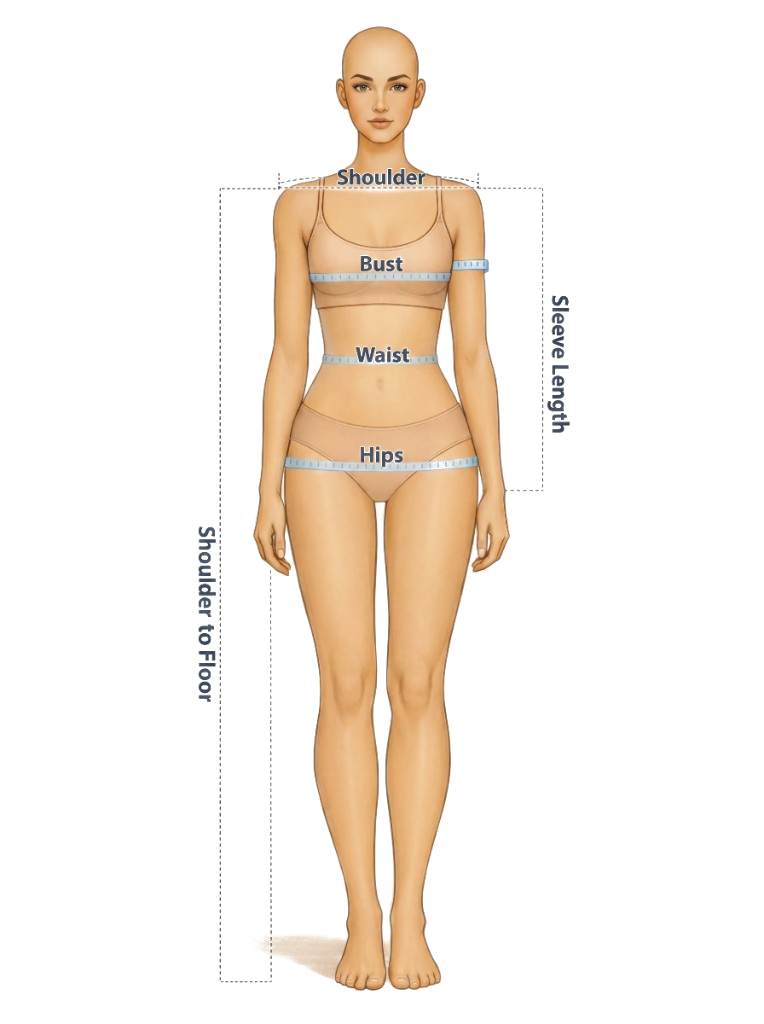
To measure yourself for a dress, record your bust, natural waist and fullest hip circumference with a soft tape, standing naturally and without pulling the tape tight. Use one unit throughout and compare the numbers with the chosen style's sizing information. For a long dress, provide your height without shoes and your planned heel height separately. Confirm any additional length measurement before taking it.
This guide expands the retail body-measurement instructions on the LOOKE Size Guide. It is not a new size chart and does not replace measurements or instructions specific to an individual product.
1. Prepare the tape, your notes and the product link
Use a flexible measuring tape that can lie smoothly around the body. Have a mirror or another person help check the tape across your back. Take measurements over the undergarments you expect to wear with the dress rather than bulky clothing, and tell us about underlayers that materially affect your measurements or fit.
Write down the product link and color before comparing sizes. The same letter size is not a promise of identical fit in a strapless midi, an open-back gown and a fitted crop top. The dress's construction matters alongside the numbers.
Keep your posture natural and your stomach relaxed. Record centimeters or inches explicitly; a number without a unit can be misunderstood. As a practical check, repeat each measurement with the tape repositioned. If the readings differ, check the tape's position instead of choosing the number you prefer.
2. Measure your bust circumference
Wrap the tape around the fullest part of your bust, keeping it level across your back. Let it sit close to the body without compressing it. Relax your arms when the tape is positioned, and check that it has not slipped upward at the back.
A bust circumference is not your bra band size and is not the width of a dress measured from side seam to side seam. If a particular style requires an underbust measurement or another fitting detail, wait for the requested method rather than putting that number into the Bust field.
3. Measure your natural waist
Measure around your natural waist, usually the narrowest area of your torso. Keep your stomach relaxed and the tape level. The waistline of your favorite jeans may sit above or below this point, so do not use the position of a low-rise waistband as a substitute.
Report the number you measure. Do not subtract an allowance because you want a fitted look or add extra room to create comfort. Those changes make the record less useful for assessing the intended fit.
4. Measure your fullest hips and seat
Stand with your feet together and take the tape around the fullest part of your hips and seat. Check the view from the side or ask a helper to keep the tape level. This is a complete circumference, not a half-width across a garment.
Do not assume that the correct position is the same fixed distance below the waist for every person. Find your own fullest area. For a close-fitting dress or a style with attached shorts, send this measurement even when your main concern is the neckline.
5. Keep height, shoe height and garment length separate
LOOKE's retail Size Guide asks for height without shoes. For a floor-length dress, also tell us the heel height you plan to wear. Do not quietly add the heels to your height, because that changes what the number means.
The current Custom Size form on applicable products includes a field called Waist to Feet. That is not a field labeled Hollow to Hem, total height or finished dress length. If the product page does not define the starting point, ending point and shoe treatment for a requested length, contact us before submitting it.
An asymmetric hem or a train creates another distinction: the front, side and back can finish at different levels. State which part of the garment matters to your request. A single overall length does not fully describe a waterfall hem or a trailing skirt.
6. Do not mix body and garment measurements
| Number | What it describes | How to use it |
|---|---|---|
| Body circumference | A tape measurement around your body. | Use it for the corresponding Bust, Waist or Hip body field. |
| Flat garment width | A measurement across a garment laid flat. | Use only when a garment-measurement comparison is requested. |
| Size label | A brand or product's size designation. | Compare its chart with your measurements; do not substitute the label for the numbers. |
Doubling a flat garment width does not automatically give the body measurement that garment was designed to fit. Construction, intended fit and stretch affect the relationship. Our Size Guide includes additional garment-measurement references beneath the retail instructions; use the section appropriate to your task.
7. What to do when your measurements span sizes
Compare all three circumferences with the relevant chart, then check the product's fit notes. Do not average your bust, waist and hip measurements into one size, or choose a smaller size solely because the fabric stretches.
When the numbers fall across sizes, send the product link and the complete set of measurements for advice. For example, a secure strapless fit and a comfortable attached-shorts fit may need to be considered together. A general chart is a reference, not a guarantee that every size shown is offered in every product.
Our Love Gown and Venus Wet Look Dress currently offer Custom Size alongside their standard options. Check your selected product rather than assuming every dress has the same ordering choices.
Your measurement record
Prepare the following information for a sizing enquiry or an applicable Custom Size order:
- Product link and selected color.
- Measurement unit: cm or in.
- Bust, natural waist and fullest hips.
- Height without shoes.
- Weight with its unit when requested by the order form.
- Planned heel height for a long dress, recorded separately.
- Any additional length measurement, labeled exactly as requested and taken using the confirmed method.
- Destination and Needed By date when you are ordering for an event.
The Needed By date helps communicate your plans; it is not a delivery guarantee. Follow the current product instructions and confirm a fixed deadline before ordering.
Common measurement questions
Can height and weight tell me my dress size?
They provide context, but they do not replace bust, waist and hip measurements. Share the actual circumferences and chosen style rather than relying on another person's size.
Should I add extra room to my measurements?
No. For LOOKE retail custom-size enquiries, submit the measured numbers without adding your own allowance. Describe your preferred fit in a separate note.
Do I need to measure again for an open-back dress?
Use up-to-date body measurements and consider the underlayers you will actually wear. Explain any support or coverage requirements separately; a circumference alone does not describe where a neckline or back opening will sit.
Source and scope: Adapted from LOOKE's existing Size Guide and Body Measurements for Retail Orders and the Custom Size fields on the linked products, checked October 6, 2026. The cover is the store's existing measurement reference, not a new fitting assessment.
Explore the pieces