WILLKOMMEN IN DER WELT DER HANDWERKLICHEN MODEPRODUKTION


Occasion Dressing
Choosing a Wedding After-Party Dress: Length, Coverage and Movement
Choose your bridal after-party look around what happens next: dinner, dancing, photographs or a venue change. Compare hemlines, coverage and practical fitting details.
On this page
Choose a wedding after-party dress around your next activity, not just a second photograph. Decide how much time you will spend sitting, dancing, walking between venues or posing for portraits. Then compare the neckline, coverage, shortest hem and any trailing fabric with the underwear and shoes you plan to wear.
This guide is for a bride considering a change during the wedding celebration. For a pre-wedding trip or celebration with friends, use our separate bachelorette outfit guide. Guests should follow the couple's and venue's instructions rather than treating these bridal suggestions as a guest dress code.
Start with the part of the evening you are dressing for
Before choosing a silhouette, name the main task. For a long seated dinner, check the neckline and skirt coverage while seated. For a busy dance floor, pay attention to trailing fabric and whether the dress stays comfortable through your intended movements. For a venue change, include stairs, transport and somewhere to store the first outfit.
There is no requirement here to change into white or to choose a mini. A second look can repeat the ceremony color, introduce a different one or keep the same dress with a simpler styling plan. The useful question is whether the change solves a real need or adds an experience you value.
Look 1: a white halter mini with an open back
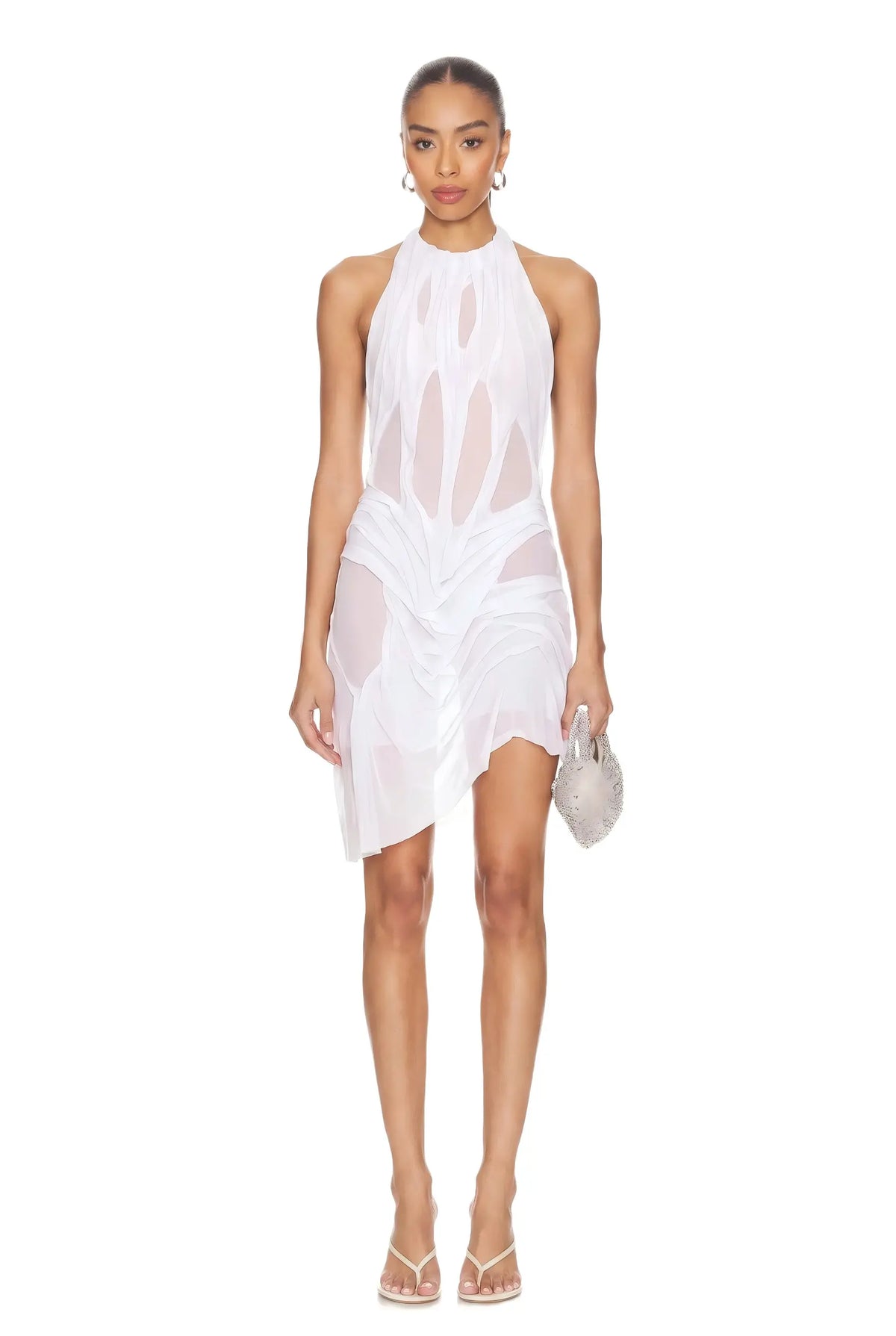
The Bella Wetlook Halter Mini Dress offers a compact mini silhouette with hand-draped mesh, a tie-up halter neckline and a low open back. The White colorway is a candidate when you want a short bridal look rather than another full-length gown.
Our styling suggestion: let the draped surface and neckline lead. Try a small clutch and shoes you have already worn comfortably, then decide whether earrings are enough rather than adding jewelry at every focal point.
Before choosing: the mesh is intentionally semi-sheer. Plan the open-back underlayer and check the hem while sitting. A shorter skirt removes a long train from the equation, but it does not prove a particular dress is comfortable for every dance movement or body proportion.

Look 2: an asymmetric one-shoulder silhouette
The Elysia Wetlook Draped Mini Dress is a white one-shoulder style with sculptural folds, sheer illusion areas and an asymmetric hem that combines a shorter section with a longer cascading drape.
Our styling suggestion: keep the shoulder line visible and avoid covering the main draping with a large necklace. Compare the look with your hair up and down before deciding; the neckline does not require one fixed hairstyle.
Before choosing: evaluate both the shortest and longest parts of the hem. The shorter side determines part of the coverage, while the longer drape changes how the dress moves. Its product description should not be treated as proof of an opaque lining or built-in shorts where those details are not specified.

Look 3: a light pink strapless midi
The Eos Wet Look Strapless Midi Dress is Light Pink, not white. Its strapless neckline, water-ripple folds and asymmetric waterfall hem offer another direction when you want a color change or a different neckline for the evening.
Our styling suggestion: compare a fine necklace with earrings only, and choose the combination that leaves the draped neckline readable. Keep the shoe and bag choices simple enough that you can still focus on the dress.
Before choosing: the built-in shorts add a layer beneath the skirt, but sheer sections remain. Check the upper-body fit separately from the fit through the shorts. A midi label does not describe exactly where each side of an asymmetric hem will fall on you.

Look 4: a low-back gown for a deliberate long-dress moment
The Two Strap Wetlook Love Gown combines a scoop neckline, two fabric shoulder straps, an open low back and an extended train. The White colorway can suit a planned portrait or evening entrance when you want to keep a long bridal silhouette.
Our styling suggestion: use the open back and trailing skirt as the main visual elements rather than adding several competing accessories. Consider where the train can be arranged without blocking a walkway.
Before choosing: the attached shorts are mesh, not a full opaque lining. The train needs practical consideration around crowds, stairs and transport. Do not assume the gown includes a bustle or that the train can be shortened; confirm any specific request before ordering. It may be a better candidate for a managed photo moment than a crowded dance floor.

Choose coverage and support before finalizing the look
A second outfit can have different neckline and underwear requirements from the first. Lay out the entire combination in advance rather than discovering during the change that a bra band crosses the open back or that a slip shows beneath the shorter side of the skirt.
For a sheer dress, decide which areas you want covered and whether visible underlayers are intentional. Small adhesive covers, supportive bras, bodysuits and slips serve different purposes. Read our sheer dress coverage guide to compare them, and follow the relevant undergarment maker's instructions.
A fitting check for your own outfit
- Wear the dress with the exact underwear and shoes planned for the celebration.
- Check the front, sides and back in a mirror, including the shortest hem and any open panels.
- Sit down, walk and try the arm movements you expect to make. Confirm you can move without repeatedly repositioning the neckline.
- Compare the outfit in ordinary indoor light and daylight; include a flash photograph when that is relevant to your plans.
- Practice handling any trailing fabric without pulling on decoration, seams or delicate mesh.
This is a suggested fitting checklist, not a report that these styles have passed a standardized dancing or opacity test. Your own fit, styling and venue conditions still matter.
Plan the change as carefully as the outfit
Choose a private changing location, decide who will help if needed, and arrange somewhere safe for the ceremony outfit. Keep the second dress, shoes, underwear and selected accessories together so you are not searching for a missing item during the celebration.
For a long dress, decide whether you will change shoes as well. Send your height without shoes and the planned heel height separately when requesting length advice. Use our Size Guide and confirm any additional measurement method rather than estimating it from a photograph.
Before ordering for a fixed date, confirm the selected product's current production information and available delivery service. The Shipping Policy and a direct enquiry can help you clarify arrangements. A date entered in the Needed By field is not a delivery guarantee.
Common questions
Does a bride need a separate after-party dress?
No. This is an optional styling and practical choice. A change is useful when it supports a different activity, fit preference or look you actually want.
Is a mini always better for dancing?
No. Length is only one factor. Check the fit, coverage, neckline and the movements you expect to make. A mini can still need adjustment or feel unsuitable for your plans.
Can I choose a sheer bridal after-party dress?
Consider your coverage preference and the venue's expectations. Review the actual panels and lining, then try the complete outfit with its underlayers before deciding.
Can I request another length or more coverage?
Ask about the specific garment before ordering. A lining change or a revised train is a design request, not something automatically included with a Custom Size selection.
Source note: Garment facts come from the linked LOOKE product descriptions and options checked October 6, 2026. Outfit combinations and activity-based recommendations are editorial suggestions. Product photographs are catalogue illustrations, not newly conducted fit or movement tests.